Similarly one may ask, what is a perceptual impairment?
an impaired ability to organize and interpret sensory experience, causing difficulty in observing, recognizing, and understanding people, situations, words, numbers, concepts, or images. Also called perceptual defect.
Also Know, what is perception of learning disabilities? The Self-Perception of Learning Disability (SPLD) instrument measures the extent to which children with learning disabilities perceive their disability as (a) delimited rather than global, (b) modifiable rather than permanently limiting, and (c) not stigmatizing.
Also asked, what is a perception disability?
Perceived disability is where the claimant does not actually have a disability meeting the Equality Act definition, but the discriminator perceives the person as having a disability.
What are the 4 major types of learning disabilities?
Types of Learning Disabilities
- Dyscalculia. A specific learning disability that affects a person's ability to understand numbers and learn math facts.
- Dysgraphia.
- Dyslexia.
- Non-Verbal Learning Disabilities.
- Oral / Written Language Disorder and Specific Reading Comprehension Deficit.
Related Question Answers
What causes perceptual impairment?
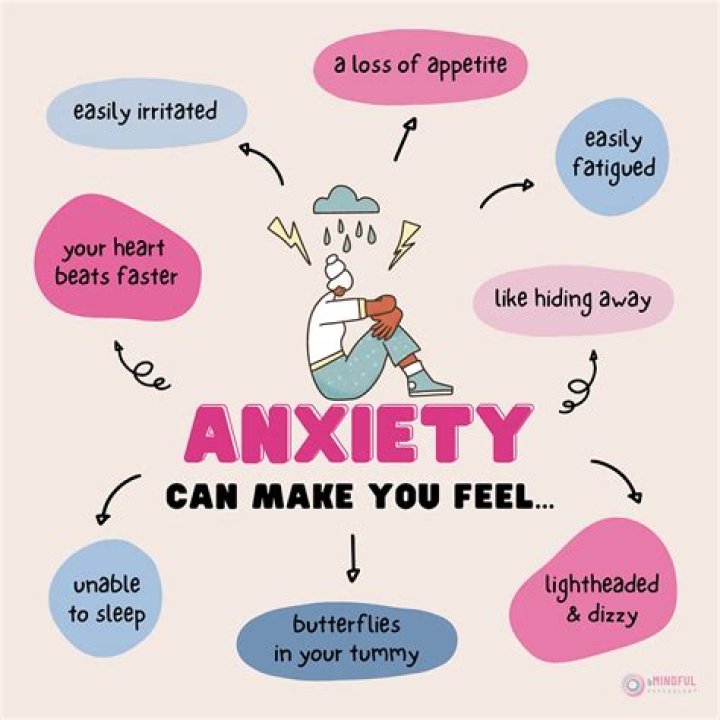
Perceptual impairments result mainly from damage to the parietal and occipital lobes and associated neuronal networks. Visual and perceptual impairments may result in anxiety and distress. However, the person may have limited insight into the cause of their difficulty.What causes perceptual problems?
What causes sensory and perceptual problems? Damage to the right side of the brain or the parietal and occipital lobes of the brain can cause sensory and perceptual problems. . These areas of the brain process the input from our senses.What is a perceptual skill?
Perceptual skills are evaluated during the assessment session. Visual perception is the capacity to interpret or give meaning to what is seen. These skills include: spatial relations, figure ground, discrimination, memory, closure and form constancy.What are cognitive perceptual skills?
Traditionally, perceptual-cognitive skills have been defined as the ability to identify and process environmental information, and integrate them with pre-existing knowledge and motor capabilities, to select and execute adequate actions (e.g., Marteniuk, 1976).What is depth perception?
When people talk about depth perception, they're referring to your eyes' ability to judge the distance between two objects. Both of your eyes perceive the same object slightly differently and at slightly different angles, but your brain can merge the two images into one 3-D image.Is perception an emotion?
Emotions are typically viewed as having three components: subjective experience, physical changes, and cognitive appraisal; emotion perception is the ability to make accurate decisions about another's subjective experience by interpreting their physical changes through sensory systems responsible for converting theseWhat are perception factors?
One's attitudes, motivations, expectations, behavior and interests are some of the factors affecting perception.What are some of the common features to the public perception towards disability?
Four common features central to the public perception disability- Disabled are considered to be biologically given.
- They are seen as a victim.
- When the disabled person is confronted with problem, it is considered to be natural for other due to his/her impairment.
Do perceptions matter?
Perceptions do matter. The way we appear to others can affect how they in turn react to us, and the degree of confidence or comfort they have in dealing with us. Customers and callers can pick up on your attitudes towards them.What are the different models of disability?
The primary models of disability used are the Medical Model, Functional Model, and Social Model. Medical Model – The medical model describes disability as a consequence of a health condition, disease or caused by a trauma that can disrupt the functioning of a person in a physiological or cognitive way.What are three examples of disability discrimination?
5 Examples of Disability Discrimination in the Workplace- Example #1: Not Hiring A Candidate Because of His Disability.
- Example #2: Failing to Accommodate An Employee's Disability.
- Example #3: Harassing Someone With A Disability.
- Example #4: Asking An Applicant to Take A Medical Exam Before A Job Offer Has Been Made.
What are the factors affecting sensation and perception?
Sensory adaptation, selective attention, and signal detection theory can help explain what is perceived and what is not. In addition, our perceptions are affected by a number of factors, including beliefs, values, prejudices, culture, and life experiences.Do children with disability usually have low self esteem?
Evidence suggests that children with learning disabilities are at greater risk of having a poor sense of academic self-concept as this is the area in which they experience the most difficulty.What are the 7 main types of learning disabilities?
In particular, psychology professionals should study these seven learning disabilities:- Dyslexia.
- Dysgraphia.
- Dyscalculia.
- Auditory processing disorder.
- Language processing disorder.
- Nonverbal learning disabilities.
- Visual perceptual/visual motor deficit.
Is ADHD a disability?
Under both the ADA and another law known as the Rehabilitation Act of 1973, ADHD is considered a disability in the United States, but with strict stipulations. For instance, ADHD is considered a protected disability if it is severe and interferes with a person's ability to work or participate in the public sector.What are the top 5 learning disabilities?
5 Most Common Learning Disabilities- Dyslexia. Dyslexia is perhaps the best known learning disability.
- ADHD. Attention Deficit/Hyperactivity Disorder has affected more than 6.4 million children at some point.
- Dyscalculia.
- Dysgraphia.
- Processing Deficits.